

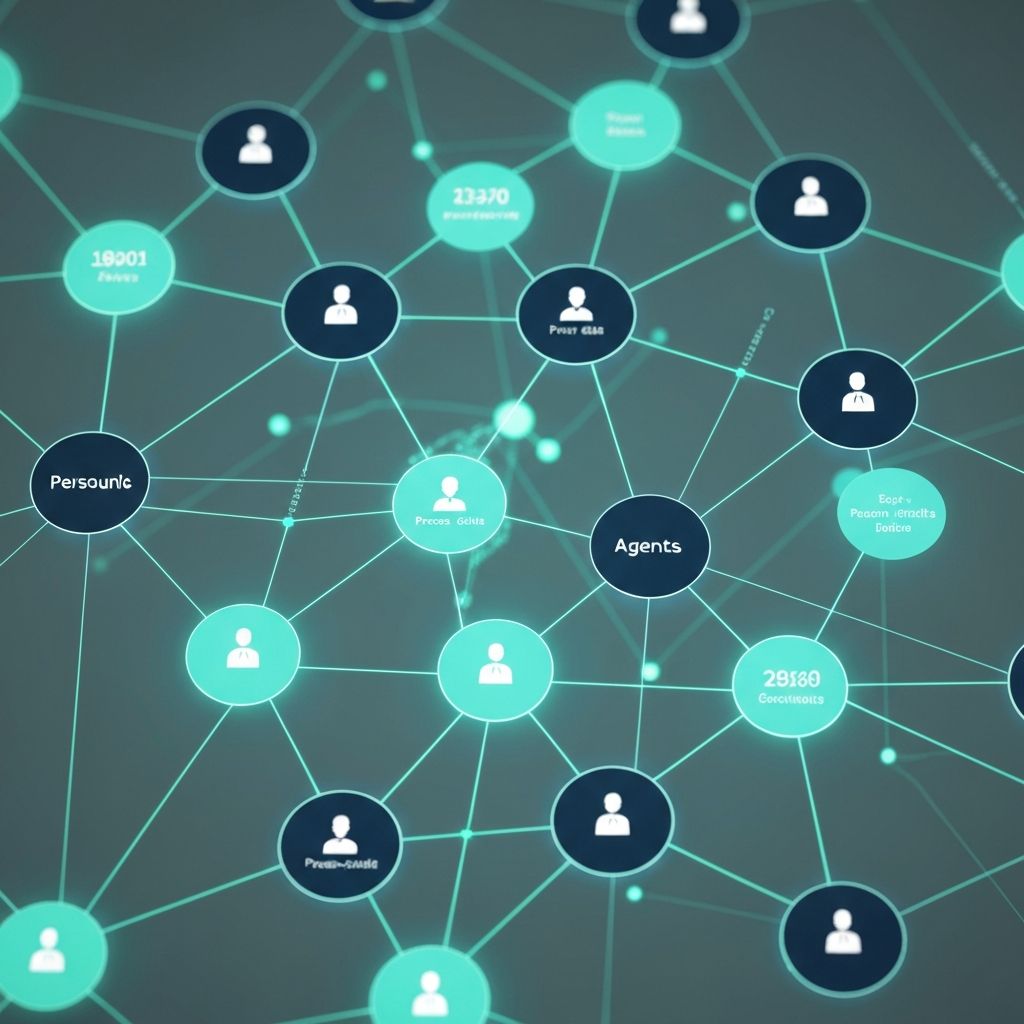
LEGACII: Privacy-First Knowledge Graphs
The LEGACII initiative with the Air Force District of Washington is a flagship example of our knowledge management vision. By developing a privacy-first knowledge graph, we are enabling secure, user-controlled information sharing across systems, agencies, and lifetimes — so service members can shape, use, and preserve their own stories while the institution gains deeper, more connected insight.
LEGACII addresses challenges such as integrating heterogeneous data with varying levels of trust, defending against AI-powered inference attacks on sensitive relationships, and maintaining high-quality, long-lived records over the entire lifecycle of service. The same patterns apply to civilian agencies managing complex case histories, research portfolios, or regulatory precedents.
NIRA's LEGACII initiative — a privacy-first knowledge graph developed under an Air Force District of Washington SBIR Phase I contract to preserve and connect the legacies of service members.
We apply AI across the full knowledge management stack. Our emphasis is on transparent, auditable AI that augments human expertise rather than replaces it, with controls to mitigate bias, hallucination, and over-reliance on automated outputs.
Large Language Models
Summarize, cross-reference, and surface insights from large bodies of policy, case files, or technical documentation with auditable AI assistance.
Semantic Search & Graph Analytics
Understanding entities and relationships — not just keywords — enabling users to ask complex questions about people, events, and outcomes.
Intelligent Assistants
Helping analysts, case workers, and leaders navigate institutional knowledge using natural language queries that surface the right answer at the moment of need.
Defense & Personnel Readiness
Preserving and connecting service member histories, training, and accomplishments to support assignments, benefits, and legacy — the core mission of LEGACII.
Regulatory & Legal Knowledge
Organizing rulings, precedents, and guidance so staff can quickly understand how similar cases were handled and what rules apply — reducing research time dramatically.
Research & Public Health
Linking studies, datasets, and operational records to enable faster discovery and better translation of findings into practice across research portfolios.